



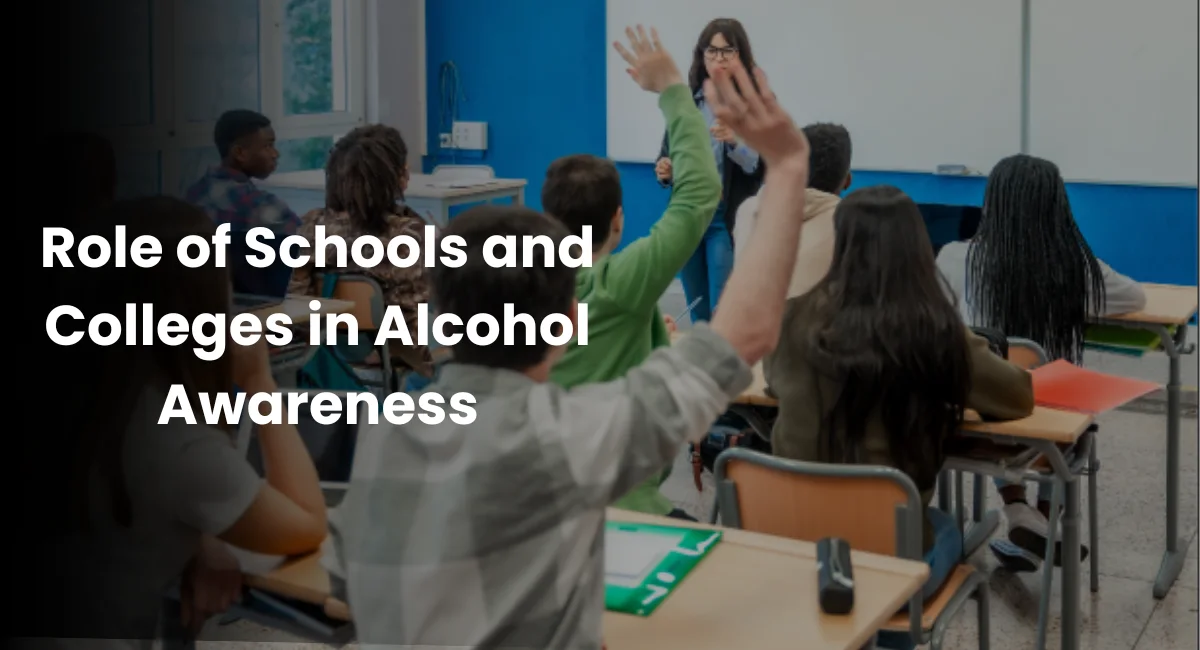
Role of Schools and Colleges in Alcohol Awareness
Alcohol consumption among young people is a growing public-health concern that impacts their learning, behaviour and long-term well-being as well. While parental guidance and legal regulations play a crucial part in prevention, schools and colleges hold a strategic position in shaping responsible attitudes among students. Educational institutions are not only the centres of academic learning but also environments where values, decision-making skills and behavioural patterns are formed.
This blog explains how schools and colleges can contribute effectively to alcohol awareness in line with widely recognised frameworks such as NCERT’s Life Skills Education (LSE) model, World Health Organization (WHO) preventive guidelines and UGC campus safety regulations.
Why Alcohol Awareness Matters in Educational Institutions?
Adolescence and early adulthood are core periods marked by experimentation, peer influence, curiosity and emotional changes. Students may be exposed to alcohol without understanding its long-term consequences on health, academics and safety. According to public-health research, early alcohol use (especially before the age of 21) increases the risk of: -
- Poor academic performance
- Impaired judgment and risk-taking
- Mental-health issues such as anxiety and depression
- Long-term dependence or addiction
- Accidents, injuries and legal consequences
Schools and colleges act as a first point of prevention by offering accurate information, promoting healthy behaviours and strengthening students’ life-skills.
1. Integrating Alcohol Education into the Curriculum
NCERT and WHO recommend integrating substance-abuse awareness into academic subjects through Life Skills Education (LSE). When students understand the scientific, legal and social aspects of alcohol use, they are more likely to make informed decisions.
Key curriculum components include: -
- Physiological and psychological effects of alcohol
- Legal age restrictions and penalties for underage drinking
- Long-term health risks and behavioural impact
- Myths and facts related to alcohol consumption
- Real-life case studies and decision-making scenarios
Subjects like biology, health education, physical education and value-education classes can effectively incorporate these modules.
2. Conducting Awareness Workshops and Seminars
Workshops conducted by healthcare professionals, psychologists, educators, law-enforcement officers and organisations working in addiction prevention significantly strengthen awareness efforts.
Topics usually covered include: -
- Peer pressure management
- Early warning signs of alcohol use
- Healthy coping strategies for stress
- Safety protocols for public spaces and campus events
- How to identify and support peers at risk
Interactive sessions encourage discussion, help correct misconceptions and provide practical, real-life perspectives.
3. Counselling and Psychological Support Services
According to NIMHANS guidelines, early mental-health support plays a key role in preventing substance misuse. Many students turn to alcohol due to emotional distress, academic pressure or personal issues.
A strong student-support framework includes: -
- Certified counsellors trained in adolescent and youth mental health
- Confidential counselling rooms or drop-in centres
- Mental-health screening and early-identification programs
- Peer-support systems
- Linkages with any authorised de-addiction or rehabilitation centres
By addressing underlying causes, educational institutions minimize the likelihood of alcohol misuse as a coping mechanism.
4. Creating a Supportive and Open Environment
Students should feel encouraged to discuss their concerns related to alcohol without fear of stigma or disciplinary bias. WHO’s school-health model highlights the importance of nurturing a safe, inclusive environment.
Institutions can enable this by: -
- Training teachers to handle sensitive issues with empathy
- Establishing peer-led support clubs
- Promoting anti-bullying and anti-ragging measures
- Building trust between educators and students
A supportive atmosphere equips students to seek help early and to develop responsible behaviour patterns.
5. Strengthening Policies and Campus Regulations
UGC and AICTE mandate strict campus rules and regulations to prevent substance misuse. Institutions should clearly communicate rules to students, staff and parents.
Policy measures include: -
- Prohibition of alcohol possession, consumption or distribution on campus
- Zero-tolerance policy for the ragging or forced drinking
- Guidelines for safe, secure and alcohol-free campus events
- Disciplinary procedures for violations
- Monitoring of campus surroundings to prevent any external influence
- Clear policies help to maintain discipline, safeguard student safety, welfare and reinforce the seriousness of alcohol-related offences.
6. Parental Involvement and Community Collaboration
Alcohol prevention requires coordinated involvement from families, communities and institutions. Schools and colleges should work closely with parents, local health authorities, NGOs and government initiatives such as NSS, Red Ribbon Clubs and community health centres.
Ways to involve parents: -
- Parent-teacher meetings focused on substance-abuse awareness
- Workshops on adolescent behaviour and communication
- Guidance on early-warning signs and home-based monitoring
Community partnerships provide additional expertise and support for prevention and counselling.
7. Promoting Healthy Alternatives and Lifestyle Activities
Providing students with constructive alternatives reduces the likelihood of alcohol use due to boredom, peer influence or social pressure. WHO’s Health-Promoting Schools approach emphasises engagement through extracurricular activities.
Institutions can promote: -
- Regular sports and fitness activities
- Arts, culture and creativity clubs
- Student leadership programs
- Volunteer and social-responsibility initiatives
- Alcohol-free celebrations and events
Building an active and engaging campus environment helps students develop healthy habits and meaningful social connections.
Conclusion
Schools and colleges have a vital role in shaping responsible behaviour toward alcohol consumption. By combining curriculum-based education, awareness programs, counselling services, institutional policies and community collaboration, educational institutions can create an environment that supports safe, healthy choices.
Alcohol awareness is not a one-time activity but an ongoing responsibility. When schools and colleges adopt structured, organized, evidence-based approaches that match the national and international standards, they significantly minimize the risks associated with alcohol use and help build healthier, more responsible communities.
Recent Post
Alcohol-Free Challenge
This challenge isn’t about lifelong abstinence or strict rules; it’s about pausing, observing and understanding how alcohol truly...
December 17, 2025
Role of Schools and Colleges in Alcohol Awareness
This blog explains how schools and colleges can contribute effectively to alcohol awareness in line with widely recognised...
December 15, 2025

How to Start Your Recovery Journey from Alcohol Addiction
Recovery is a continuous process of healing, self-awareness and growth. With the right mindset, professional guidance and support...
December 09, 2025
Get The Free Quote!
KEEP IN TOUCH




POPULAR POSTS
.webp)
Legal Consequences of Drunk Driving
Driving under the influence not only risks the...
December 04, 2025 • 2546 views.
Alcohol Laws in India
This decentralization results in widely varying legal drinking...
August 14, 2025 • 1469 views.
How Stress and Anxiety Can Lead to Unhealthy Drinking Habits
In this blog, we’ll explore how stress and...
October 17, 2025 • 892 views.
How to Practice Moderate Drinking
In this blog, we’ll explore what moderate drinking...
August 02, 2025 • 844 views.
Binge Drinking
Binge drinking is often portrayed in movies and...
August 04, 2025 • 812 views.