



Alcohol and Juvenile Crimes: Legal Challenges & Preventive Measures
Alcohol consumption among juveniles is a growing concern that carries significant social, legal and psychological implications. Across India and many other countries, underage drinking not only creates long-term health risks but also increases the likelihood of minors being involved in unlawful activities. From petty thefts and vandalism to serious offences like assault, drunk driving and sexual misconduct, alcohol often acts as a catalyst for impulsive and criminal behavior.
The link between alcohol and juvenile crime is well-documented. According to the National Crime Records Bureau (NCRB), substance influence (including alcohol and drugs) is a contributing factor in 7–10% of juvenile crimes annually. Reports by the World Health Organization (WHO) emphasize that early alcohol use significantly heightens aggression, risk-taking behaviour and impaired judgment, all key drivers of juvenile offences.
This complex nexus requires a strong legal framework, effective enforcement, community participation and preventive strategies.
Understanding the Connection Between Alcohol and Juvenile Crime
Juveniles are more vulnerable to alcohol’s effects due to psychological immaturity, peer pressure and lack of impulse control. Studies by UNICEF and WHO confirm that alcohol:
- Impairs judgment
- Lowers inhibitions
- Increases aggression
- Enhances susceptibility to risky peer influence
Common offences linked to juvenile alcohol use include:
- Drunk driving or riding without a licence
- Disorderly conduct and public nuisance
- Assaults or involvement in violent altercations
- Property damage and vandalism
- Theft or petty crimes committed under influence
- Sexual offences or unsafe behaviours
- Runaway cases and truancy
The NFHS-5 (National Family Health Survey) also indicates that alcohol experimentation among Indian adolescents usually begins between 15–17 years, highlighting early vulnerability.
Legal Framework Governing Underage Drinking and Juvenile Offences
1. Juvenile Justice (Care and Protection of Children) Act, 2015
The JJ Act governs procedures for children in conflict with law.
While it does not have alcohol-specific clauses, any offence committed by a minor under alcohol influence is processed under the Act’s rehabilitative framework.
Important Alignment Note: Juveniles aged 16–18 years may be tried as adults only for heinous offences (punishable with more than seven years), after a preliminary assessment by the Juvenile Justice Board as mandated under Section 15.
2. State Excise Laws
All State Excise Acts strictly prohibit:
- Selling alcohol to minors
- Allowing consumption by minors in premises
- Supplying alcohol to minors
Penalties include:
- Heavy fines
- Suspension or cancellation of the liquor licence
- Criminal prosecution in some states
Many states (Delhi, Maharashtra, Karnataka, etc.) have intensified inspections to curb underage access.
3. Motor Vehicles Act, 1988
Driving under influence attracts strict penalties under Section 185.
If a juvenile is caught:
- A ₹25,000 penalty may be imposed on the owner/guardian of the vehicle.
- The juvenile faces proceedings under the JJ Act.
- The vehicle owner’s licence may be suspended for 3 months.
This aligns with the 2019 amendments for stricter road safety enforcement.
4. Bharatiya Nyaya Sanhita (BNS), 2023
If a juvenile commits an offence such as assault, mischief, theft or vandalism while under the influence of alcohol, the corresponding provisions under the BNS, 2023 will apply.
Important clarification:
Alcohol consumption does not excuse or justify the offence. The defence of intoxication is recognised only in cases of involuntary intoxication, as provided under Section 23 of the BNS, which does not protect juveniles (or adults) who voluntarily consume alcohol and then commit an offence.
5. POCSO Act
If intoxication leads to sexual misconduct, harassment or exploitation involving minors, the stringent provisions of the POCSO Act apply.
Clarification:
POCSO is a strict liability legislation, intoxication is not a defence under any circumstance.
Key Legal Challenges in Addressing Juvenile Alcohol-Related Crimes
1. Easy Accessibility
Despite prohibitions, NCRB and MoSJ surveys highlight that minors often obtain alcohol through poorly monitored vendors, peer supply, home stock or illegal shops.
2. Social Acceptance & Low Awareness
In many households, underage drinking is normalised. The MoSJ’s National Survey on Drug Use (2019) indicates that social environments strongly influence early alcohol experimentation.
3. Peer Pressure and Group Behaviour
UNICEF studies show peer influence is one of the strongest predictors of risky adolescent behaviour, including alcohol consumption and crime.
4. Limited Rehabilitation Infrastructure
Many juvenile homes lack dedicated:
- Psychologists
- Addiction counsellors
- Behavioural therapy modules
This limits the effectiveness of reformative measures under the JJ Act.
5. Hesitation to Report
Families usually avoid reporting juvenile alcohol incidents due to stigma, fear of various legal consequences or societal pressure, causing delays in necessary intervention.
Preventive Measures: A Holistic, Data-Backed Approach
1. Strong Enforcement of Excise Laws
- Regular inspections of liquor shops
- Strict action against vendors supplying to minors
- Monitoring bars, events and restaurants
- Police vigilance near schools, colleges, hostels and parks
Stricter enforcement significantly reduces accessibility, as seen in states that have increased vendor checks.
2. School-Based Awareness Programs
Schools play a pivotal role. WHO-backed education programs show major reductions in risky behaviour when adolescents receive early awareness.
Recommended school initiatives:
- Workshops on addiction and peer pressure
- Case-study based learning
- Counsellor-led interventions
- Helplines and mentorship programs
3. Parental Guidance and Communication
Research confirms that children with higher parental supervision and communication are less likely to engage in alcohol misuse.
Parents should:
- Discuss risks openly
- Set clear behavioural boundaries
- Monitor social environments
- Encourage honest communication
4. Community & NGO Involvement
NGOs can substantially reduce juvenile alcohol abuse by:
- Running awareness drives
- Conducting outreach in vulnerable communities
- Providing counselling support
- Collaborating with schools, police and local authorities
Neighborhood watch groups can also help detect early behavioral risks.
5. Psychological Counselling & Rehabilitation
Juveniles showing dependency or alcohol-induced behavioral issues must receive:
- Clinical counselling
- Behavioural therapy
- Family therapy
- Medical support where required
Rehabilitation conforms to the JJ Act’s reform-oriented objectives.
6. Encouraging Healthy Alternatives
Engagement in:
- Sports
- Music
- Art
- Skill-development activities
reduces idle time and helps channel adolescent energy positively, an effective prevention strategy supported by multiple youth development studies.
Conclusion
Alcohol-related juvenile crimes represent a multidimensional challenge requiring strict legal enforcement as well as proactive social measures. While India’s legal framework, such as JJ Act, Excise Laws, IPC, Motor Vehicles Act and POCSO, provides strong procedural and punitive mechanisms, the long-term solution lies in collective responsibility.
Parents, schools, communities, NGOs, local authorities and government agencies must work together to create safe environments, promote awareness, reduce accessibility and offer strong rehabilitative support. Ensuring minors grow in informed, supportive surroundings is essential not only for their personal well-being but for the overall safety and development of society.
Recent Post
Alcohol-Free Challenge
This challenge isn’t about lifelong abstinence or strict rules; it’s about pausing, observing and understanding how alcohol truly...
December 17, 2025
Role of Schools and Colleges in Alcohol Awareness
This blog explains how schools and colleges can contribute effectively to alcohol awareness in line with widely recognised...
December 15, 2025
How to Start Your Recovery Journey from Alcohol Addiction
Recovery is a continuous process of healing, self-awareness and growth. With the right mindset, professional guidance and support...
December 09, 2025
Get The Free Quote!
KEEP IN TOUCH




POPULAR POSTS
.webp)
Legal Consequences of Drunk Driving
Driving under the influence not only risks the...
December 04, 2025 • 2546 views.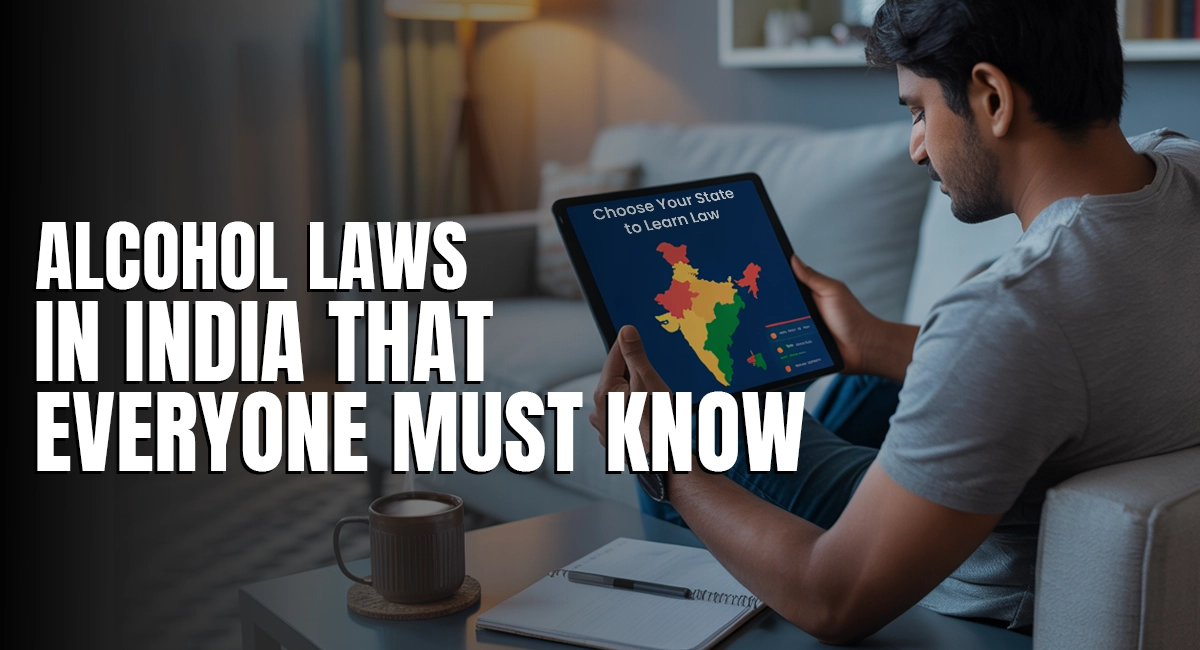
Alcohol Laws in India
This decentralization results in widely varying legal drinking...
August 14, 2025 • 1469 views.
How Stress and Anxiety Can Lead to Unhealthy Drinking Habits
In this blog, we’ll explore how stress and...
October 17, 2025 • 892 views.
How to Practice Moderate Drinking
In this blog, we’ll explore what moderate drinking...
August 02, 2025 • 844 views.
Binge Drinking
Binge drinking is often portrayed in movies and...
August 04, 2025 • 812 views.